Navigating Ethical Animal Training: Understanding the Hierarchy of Behavior Change
Working in the field of animal training can be both deeply rewarding and emotionally challenging. For those dedicated to progressive methodologies, encountering ineffective or highly intrusive training practices can often lead to feelings of frustration, helplessness, or even burnout.
To navigate these challenges and maintain a high standard of welfare, it is helpful to have a clear, objective framework. One of the most widely respected tools for guiding ethical decision-making in animal training is Dr. Susan Friedman’s “Hierarchy of Behavior Change Procedures According to the Least Intrusive Effective Alternative” (often referred to as the Humane Hierarchy). See here.
Understanding the Hierarchy of Behavior Change
Developed by Dr. Susan G. Friedman, this hierarchy serves as a roadmap for trainers to lean on when selecting intervention strategies that achieve desired behavior changes while prioritising the animal’s welfare.
The model reviews procedures from the least intrusive to the most intrusive. It encourages trainers to address foundational needs – such as health, nutrition, and environmental factors – before moving to consequence-based interventions. Using this hierarchy can help trainers prioritise the animal’s autonomy and well-being, helping to provde a clear path forward when faced with difficult training decisions.
The Need for Ethical Standards in Modern Animal Care
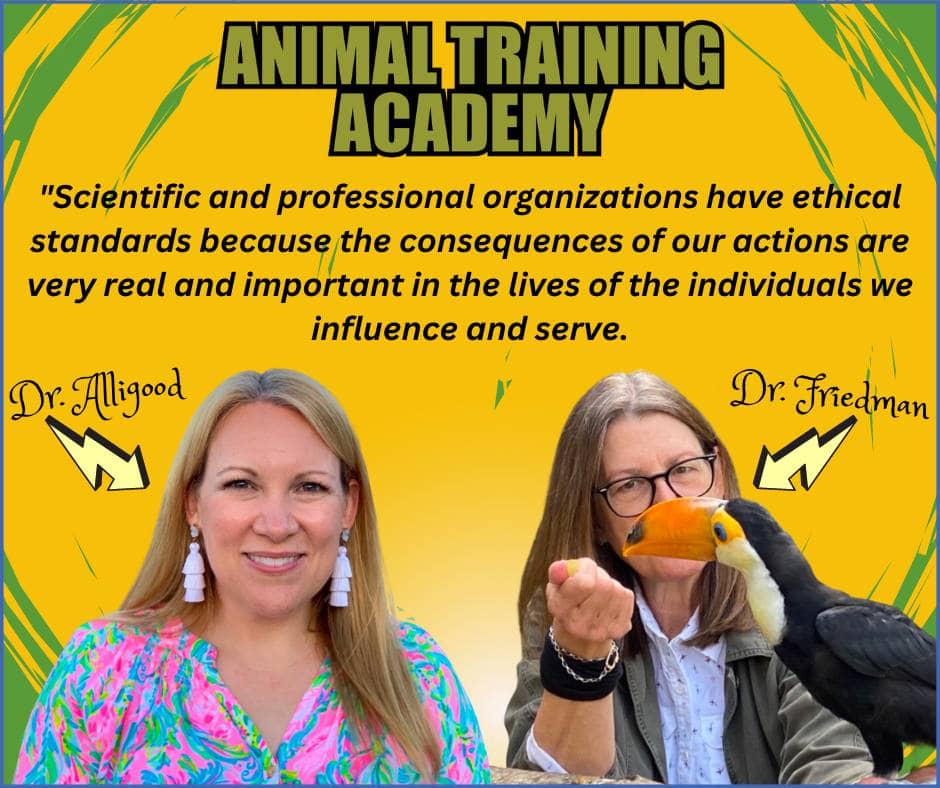
In their collaborative work, Dr. Susan G. Friedman and Dr. Christy Alligood-Rice delve deeply into the necessity of establishing modern, ethical standards in animal care.
Read the full article: To learn more about this framework, you can read the co-authored article by Dr. Friedman and Dr. Alligood-Rice HERE
Putting the Concepts into Practice
To integrate these ethical standards into your daily practice, consider asking yourself the following questions when designing any behavior modification plan:
Have physical and environmental needs been met? Is the animal healthy, pain-free, comfortable, and in a suitable environment?
Have we arranged the environment for success? Can we manage or prevent the unwanted behavior by changing the setup before teaching a new cue?
Are we using positive reinforcement effectively? Are the consequences we are delivering actually building the desired behaviors in a positive way?
Am I choosing the least intrusive, effective alternative? Is there a gentler, less intrusive way to achieve this same training goal?
Test Your Understanding
Once you have read the article, you can test your knowledge and see how well you understand these ethical training concepts by taking our short comprehension quiz HERE