Advocating for Positive Reinforcement: 4 Practical Lessons from Michele Pouliot
Advocating for force-free, positive reinforcement training can sometimes feel like an uphill climb. When faced with differing philosophies, outdated training advice, or widespread use of aversive tools, passionate trainers and pet guardians can easily feel isolated, frustrated, or unsure of how to communicate effectively.
Learning how to advocate constructively – without alienating the very people you hope to influence – is a vital skill.
To explore this challenge, we spoke on the Animal Training Academy podcast with Michele Pouliot. Michele brings over five decades of practical training experience, including a 42-year career with Guide Dogs for the Blind, where she trained more than 350 guide dog teams. An internationally recognized pioneer in Canine Musical Freestyle and a long-time faculty member at Clicker Expo conferences, Michele offers a grounded, compassionate perspective on how to guide others toward positive reinforcement.
Below are four key strategies from our discussion on how to advocate effectively for modern, humane training.
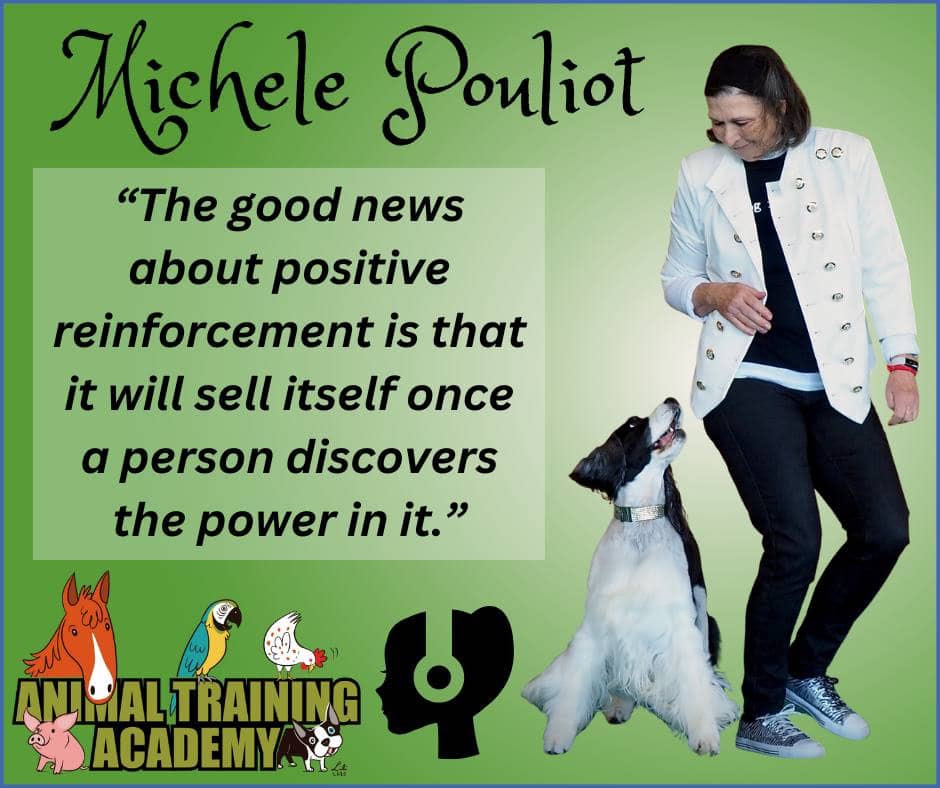
4 Principles for Effective Advocacy
1. Lead with Empathy and Openness
Advocacy rarely succeeds when driven by judgment or anger. It is helpful to remember that most handlers using traditional or aversive methods are simply doing what they were taught, often out of love for their animal and a desire to resolve a difficult problem. Approaching people with empathy and an open mind reduces defensiveness and creates space for meaningful conversation.
2. Introduce Alternatives Gradually
Directly confronting someone’s long-held beliefs often causes them to double down on their existing methods. Instead of demanding an immediate philosophical shift, consider introducing alternative techniques in small, manageable pieces. Demonstrating a simple, effective positive reinforcement exercise can spark curiosity and allow people to observe the results for themselves.
3. Observe the Human Learner as Closely as the Animal
Effective trainers know the importance of reading subtle body language in animals. The same observational skill should be applied to the humans we interact with. Pay attention to how a client or colleague responds during discussions: Are they overwhelmed? Skeptical? Interested? Tailoring your communication to your individual learner can help make your message more accessible.
4. Prioritize Flexibility Over Rigidity
If a particular conversation or training exercise is not achieving the desired outcome, be prepared to adapt your approach. Advocating for positive reinforcement requires the same behavioral flexibility we use in our training plans: if something isn’t working, assess the environment, break down the criteria, and try a different angle.
Moving Advocacy Forward
Changing hearts and minds in animal training takes patience and persistence. By focusing on connection rather than conflict, trainers can build trust and help others discover the benefits of positive reinforcement at their own pace.
If you would like to explore this topic further:
Listen to the Full Podcast Episode: Hear Michele Pouliot discuss her career and advocacy strategies on the Animal Training Academy podcast
Browse the Free Archive: Access over 230 free podcast episodes featuring experienced professionals across animal behavior, welfare, and training HERE
Join the ATA Community: Connect with a supportive, global network of force-free trainers and access our extensive webinar library by exploring the Animal Training Academy membership HERE