5 Strategies for Training and Caring for Geriatric Animals
Living with or training an animal that exhibits reactivity – whether toward people, other animals, or specific environmental triggers – can be a challenging and stressful experience. While there are numerous behavioral strategies available to address these difficulties, one structured option is Requested Approach Training (RAT).
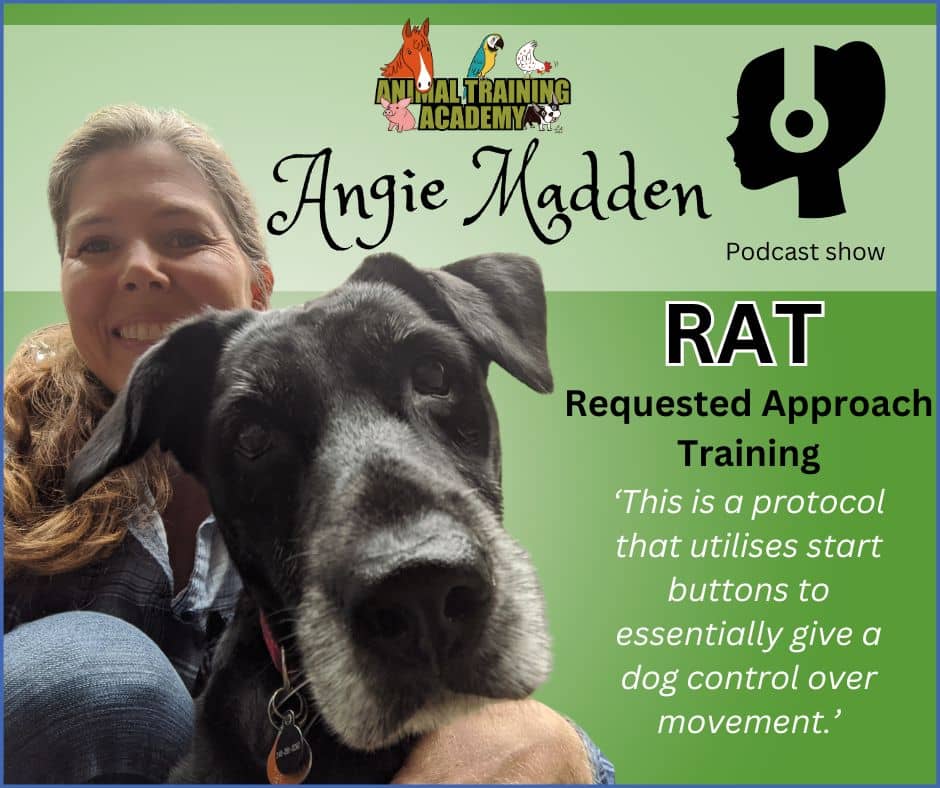
The RAT protocol, developed by Leslie McDevitt, was recently discussed in detail by trainer Angie Madden on the Animal Training Academy podcast. This approach is designed to give animals a bigger degree of control over their interactions, helping to reduce anxiety and build confidence around potentially challenging stimuli.
What is Requested Approach Training (RAT)?
RAT is a cooperative counter-conditioning protocol that utilises a “start button” behavior. This behavior allows the animal to signal when they are ready for a stimulus to move closer or for an interaction to begin.
Here are three foundational aspects of the RAT protocol:
1. The “Start Button” Behavior
At the core of RAT is a specific, easily observable behavior that the animal performs to signal readiness – such as a chin rest or a target touch. The trainer or helper only approaches or moves the stimulus when the animal actively maintains this behavior. If the animal breaks the position, the approach stops immediately, giving the animal clear control over the pace of the session.
2. Versatile Applications
This protocol can be adapted to many different scenarios. It is commonly used to help animals become more comfortable with unfamiliar people, household visitors, or intimidating objects. On the podcast, Angie shares the practical example of her dog, Piper, who learned to tolerate the sound and presence of a household fly zapper by using a chin rest as her start button.
3. Control and Predictability
By placing the control in the learner’s hands, RAT helps lower the stress and high arousal that often accompany unexpected triggers. Predictability and control are highly useful tools for reducing fear and building a positive association with previously intimidating stimuli.
Explore Further
If you are looking for systematic strategies to help a reactive animal, learning about start-button behaviors can be a helpful addition to your training toolkit.
To explore Requested Approach Training in depth, you can access our full resources:
Listen to the Podcast Episode: Hear Angie Madden discuss the practical steps of implementing the RAT protocol
Have you tried RAT or any other of Leslie Mcdevitt’s pattern games? We would love to hear about it! Leave a comment below.
Comments on Working with Reactivity: An Introduction to Requested Approach Training (RAT)
Comments on Working with Reactivity: An Introduction to Requested Approach Training (RAT)
I think this approach would work and can’t wait to research and implement it in my line of work