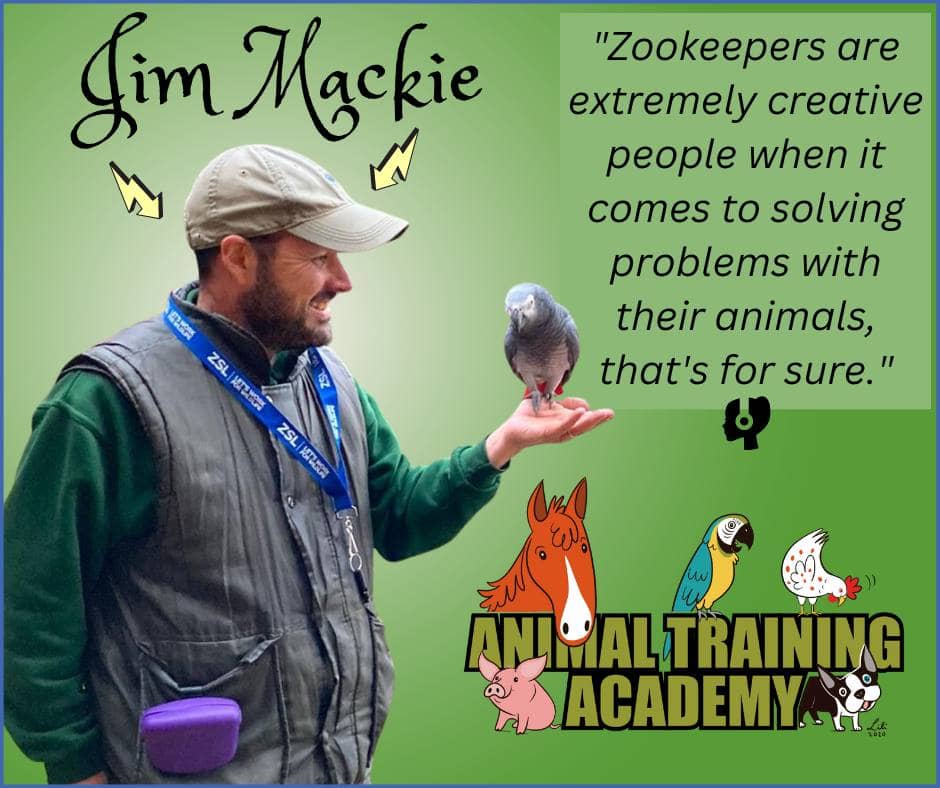
Navigating Animal Training Challenges: Three Insights from Jim Mackie
Even for dedicated animal trainers, encountering obstacles along the training journey is a common experience. When progress stalls or complex behavior issues arise, it is natural to feel a sense of frustration or professional overwhelm.
To help navigate these moments, we spoke with Jim Mackie on the Animal Training Academy podcast. Jim has spent over 25 years working with the Zoological Society of London (ZSL), where he became ZSL’s first Animal Behaviour Management Officer in 2013. During his tenure, Jim was pivotal in implementing evidence-based, force-free techniques to replace traditional restraint methods at both London and Whipsnade zoos, focusing on how trained behaviors can enhance welfare in zoological settings.
During our conversation, Jim shared three practical recommendations for trainers looking to navigate daily challenges and maintain professional resilience.
3 Key Suggestions for Training Resilience
1. Prioritize Quality Over Quantity
It can be tempting to focus on the frequency of your training sessions, but the effectiveness of each session is far more critical. Designing fewer, well-planned sessions with clear criteria and positive outcomes can be much more productive than attempting high-repetition schedules.
2. Leverage Networking and Support
Animal training can sometimes feel isolating, especially when dealing with complex cases. Engaging with online forums, professional organizations, and peer groups allows you to share experiences, troubleshoot challenges, and benefit from the collective knowledge of the community.
3. Commit to Continuous Learning
Viewing training obstacles as opportunities to learn can shift your perspective from frustration to curiosity. Staying updated with current research, refining your mechanical skills, and exploring new techniques can help you stay adaptable and confident in your practice.
To hear our full conversation with Jim Mackie and learn more about his work with ZSL, you can access the episode below