5 Strategies for Training and Caring for Geriatric Animals
Caring for aging animals can be a complex task. Whether you are working with a lifelong companion at home or a long-term resident in a zoo setting, the unique needs of senior animals can often leave us feeling overwhelmed and, at times, a bit helpless. It is a journey filled with deep emotion and unique practical challenges.
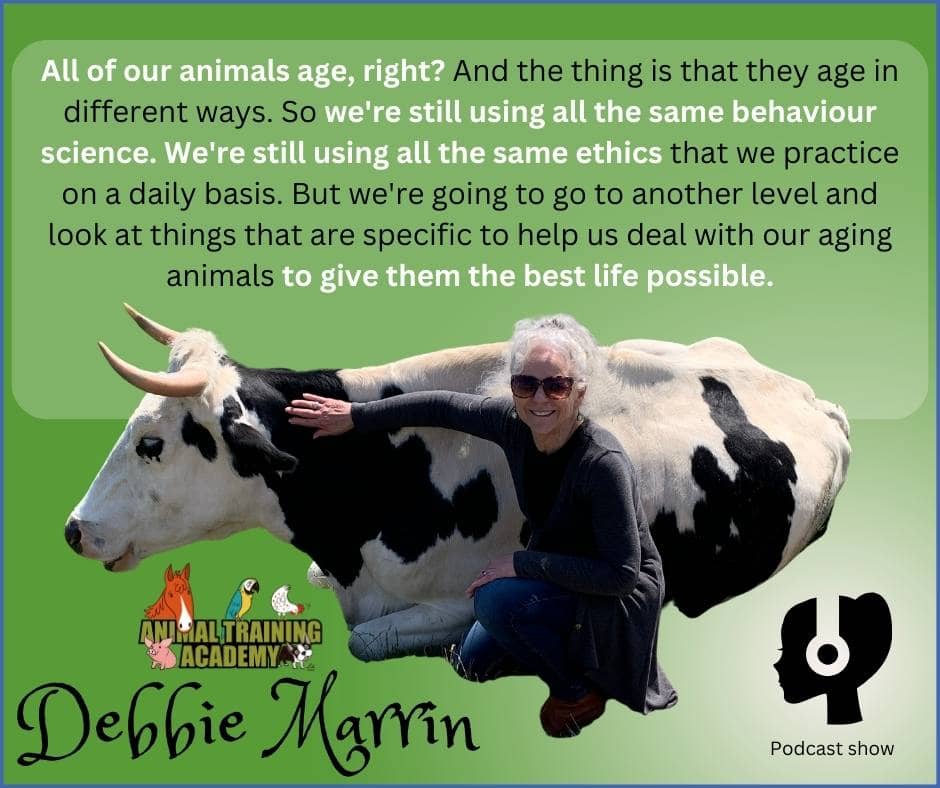
To help us navigate this path, I sat down with Debbie Marrin on the ATA podcast. Debbie is a true legend in our field, with over 40 years of professional experience in animal training and management.
Meet Our Guide: Debbie Marrin
Debbie has been at the forefront of husbandry training since the mid-80s. She has a dedicated passion for geriatric animal welfare, having co-authored multiple papers and book chapters on the subject. Her insights bridge the gap between high-level zoo management and the compassionate, individual care every aging animal deserves. Debbie has also recently joined the Animal Training Academy as one of our happiness engineers [A.K.A moderators in our membership community areas].
5 Strategies for Navigating Senior Animal Care
In our conversation, Debbie shared five key pillars to help trainers build resilience and provide the best possible quality of life for aging learners:
Be a Sharp Observer: Recognizing subtle changes both in and out of training sessions is vital. These “red flags” are often the first signs of health issues that need addressing.
Have a “Whole Life” Plan: Don’t wait for old age to start. Teaching foundation behaviors early in life makes it much easier to implement specific husbandry or medical training later on.
Educate Yourself on Senior Issues: Understanding the “why” behind behavior changes – whether it’s cognitive decline, kidney disease, or arthritis – helps you stay proactive rather than reactive.
Take a Holistic Approach: Training doesn’t happen in a vacuum. Consider environmental conditions, nutrition, medication, and daily husbandry as a single, connected system of care.
Lead with Compassion and Flexibility: Perhaps the most important tip – understand the animal’s changing physical and mental state and be willing to modify your expectations in the moment.
Listen to the Full Lesson
Don’t let the challenges of geriatric care lead to burnout. Arming yourself with these strategies will help you grow your skills and ensure that your animal learners lead fulfilling, comfortable lives in their golden years.
Your Experience
Do you have a senior animal in your care right now? What is one “small win” you’ve had in your training sessions recently? Sharing our stories helps us all build the resilience needed for this rewarding part of the training journey.
Happy Training,
Ryan Cartlidge
Animal Training Academy
Comments on 5 Strategies for Training and Caring for Geriatric Animals
Thanks ryan I don’t know how you knew I was looking for something on this subject but was just what I needed